How to Listen to Live Jazz: A Beginner's Guide to Improvisation and Interaction
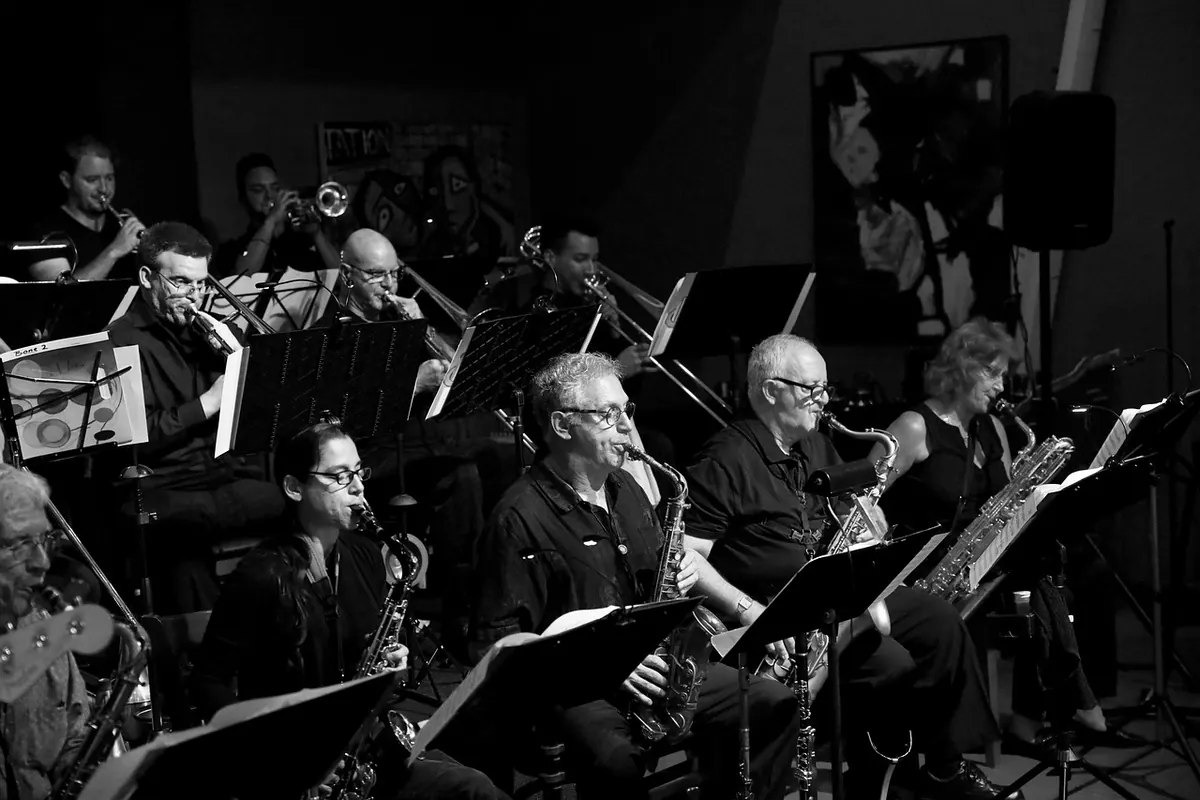
A quartet is on stage. The bassist leans in toward the drummer, the saxophonist stands up, and a melody starts that you have never heard before. Four minutes later everyone is clapping and you are not entirely sure what just happened. That feeling — that the music is happening around you rather than to you — is common, and it fades faster than you would expect. Jazz is not a secret code. It runs on conventions, and once you know a handful of them the performance opens up like a conversation you have been invited to overhear.
Most jazz standards follow a simple three-part architecture, and knowing it removes about half the confusion of a first gig.
First comes the head: the written melody, played by the horns or the pianist, sometimes in unison, sometimes in harmony. It might last thirty seconds or a minute and a half. Treat it as the thesis statement — this is the tune you are about to hear taken apart.
Then come the solos. Each player in turn improvises over the same chord sequence the head was built on. One chorus each, or three, or eight, depending on the night and the temperature of the room. Pay attention to who goes first: it is often the horn, then the piano or guitar, then the bass, then a drum feature, though bands shuffle this freely.
Finally the head returns, usually once, sometimes with a short coda or a riff-based ending that the band signals with a nod. That is the whole machine: statement, exploration, restatement. Not every performance obeys it — a ballad might open with a piano intro and skip a solo entirely, a free piece might have no head at all — but if you walk in expecting this shape, you will be right most of the night.
If you learn one listening skill, make it this one. Every tune has a fixed number of bars that repeats, and hearing where that cycle restarts is the difference between floating and following.
The most common shapes are the twelve-bar blues, the thirty-two-bar AABA song form (think of a verse that repeats, a contrasting middle, then the verse again), and sixteen-bar or thirty-two-bar through-composed tunes. You do not need to identify which one it is. You just need to feel the seam.
Here is a practical trick: at the start of the tune, find the bassist. The bass line usually marks the beginning of each cycle with a distinctive note or a small run-up. Nod gently on beat one, keep nodding, and notice when that same little run-up comes back around. That is your chorus turning over. Another cue: the drummer may drop to brushes or the pianist may go sparse for the first bar or two of a new solo, marking the top of the form. If you lose the thread, do not panic. Wait. It comes around again in thirty seconds or so, and you can climb back on.
Beginners often try to catch every note a soloist plays, which is like trying to read every leaf on a tree. Step back and listen for shape instead.
Where does the player begin — high, low, tentative, declamatory? Do they start with long held notes and get busier, or the reverse? Do they leave space, and where? A good solo has an argument to it, and the argument is usually audible even if the vocabulary is not.
Two more things worth noticing. First, the soloist is improvising over the same chords each time, so the ground stays constant while the figures on top change. If the second soloist sounds completely different from the first, that is the point — different people walking the same street. Second, listen to what the rhythm section does behind each soloist. Watch how the pianist's chords thin out when the bass solos, or how the drummer shifts from a busy ride pattern to something more open. Accompaniment in jazz is composed in real time, and it is responding directly to what the soloist is doing.
Bass, drums, and piano or guitar are not a cushion. They are the other half of the conversation. The bassist and drummer lock together and push or pull the time; the pianist or guitarist comps — plays chords in short, rhythmic jabs between the soloist's phrases, filling gaps rather than crowding them.
Watch faces and bodies on stage. A raised eyebrow, a lean toward the drummer, a hand lifted to signal a stop: these are how a band changes gears mid-tune. When the drummer suddenly cuts out for a bar and everything drops to bass alone, that is a decision made two seconds earlier with a glance.
At its root, jazz is a conversation, and the conversational habit it inherits most directly is call and response — one voice states a phrase, another answers it. You can trace it back through gospel, blues, and work songs, and you can hear it on any bandstand tonight.
Listen for it in small units. The saxophonist plays a two-bar idea; the drummer repeats it back or answers with a comment. The pianist drops a chord exactly where the bassist left a hole. The horn plays a phrase, then plays it again with the ending changed, as if to say no, like this.
The most formal version is trading: two players swap short blocks of space, usually four bars each, sometimes two, occasionally one, back and forth, with the drummer typically taking the last word. When you hear a tune suddenly become a rapid exchange of short bursts, that is trading, and it is one of the most reliable pleasures in a live set.
You are part of it too. Applause after a solo tells the band the room is listening, and musicians play differently when they feel that. If you want to clap along, the convention is beats two and four, though nobody is keeping score if you get it wrong. When in doubt, watch the bassist's foot or the drummer's hi-hat.
You do not need to prepare anything to enjoy live jazz. You need a seat, a little patience through the first tune, and the willingness to be a bit lost for a few minutes. Find the form, pick a player to follow, and listen for the answer that comes after the call. Around the third or fourth number something clicks — you stop hearing a wall of sound and start hearing a group of people talking to each other in real time. Then order another drink and stay for one more tune. That is usually when the night gets good.
Photo: tbnk37 / Pixabay
Previous Post
Acoustic vs. Electric: What Changes in a Small Venue Performance
Next Post
Open Mic Comedy Checklist: 12 Things to Prepare Before Your First Five Minutes